Breast Milk Cooler Bags: A Sourcing and Specification Guide
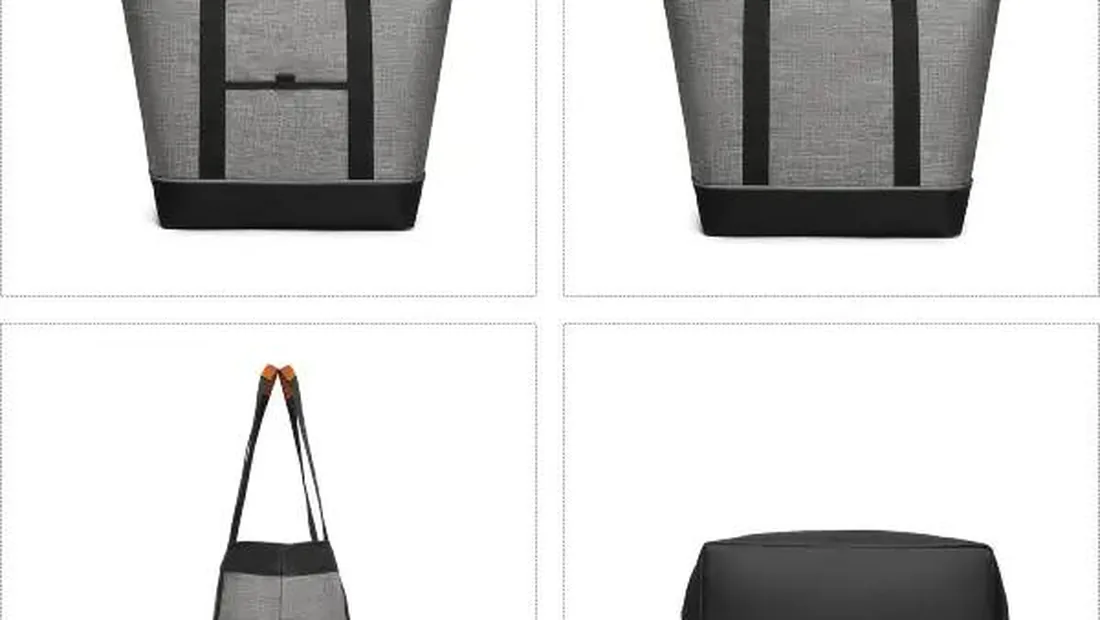
A breast milk cooler bag is not a lunch cooler with a baby print. The buyer who treats it that way ends up with two problems: a hold-time claim the lab cannot repeat, and a liner that traps milk residue in the seam. Both problems come back as returns. Sourcing this category properly means starting from the storage window the product has to serve, then working backwards into materials, closures, and tooling.
The end user is a nursing parent or a lactation room. Her bag carries expressed milk from a pump room to a fridge, or from home to daycare. She may not know what closed-cell foam is. She knows the milk has to stay cold until she can refrigerate it. Your job is to translate that need into a specification a factory can build and a lab can verify.
Why This Category Is Specified Differently From a Lunch Cooler
Milk is a food with a regulator-guided storage window. A lunch cooler holds a sandwich that will be eaten in four hours. A breast milk cooler bag holds a liquid that may be fed to an infant after a car ride, a work shift, and a daycare handoff. The consequence of temperature drift is not a warm soda. It is discarded milk and an angry parent.
That changes two axes. First, hold time becomes a compliance question, not a marketing line. Second, liner hygiene becomes a design requirement, not a care instruction. A lunch bag can hide a stained seam. A breast milk bag cannot. The buyer who specifies this category well asks about both axes before asking about colorways.
The Storage Window the Product Has to Serve
The US Centers for Disease Control and Prevention publishes guidance on expressed breast milk storage. The CDC states that freshly expressed milk can be kept at room temperature for up to 4 hours, and in an insulated cooler with frozen ice packs for up to 24 hours. Those are the CDC's published figures as of this writing. Check current CDC guidance before you print anything on a hang tag or a carton.
Those two numbers define the product. The 4-hour room-temperature window is the floor. The 24-hour cooler window is the ceiling most buyers design toward. Notice the CDC wording: an insulated cooler with frozen ice packs. Not a bag with a foil liner. Not a bag with a gel pack thrown in. The cold source and the insulation work together. A spec that ignores either one fails the use case.
Do not put medical advice on the product. Do not print feeding instructions. Attribute the guidance to the CDC and direct users to current guidance. Your packaging should say what the bag does, not what the parent should do with her milk.
What Actually Drives Hold Time
Hold time is the period during which the contents stay within a defined temperature range under stated test conditions. The industry reference for cooler bag thermal testing is explicit: a hold-time figure means nothing without the ambient temperature, starting temperature, payload, refrigerant quantity, bag size, and pass criterion. A spec sheet that says "8 hours cold" without those conditions is a guess wearing a lab coat.
Five levers drive real performance.
Insulation thickness and cell structure come first. Closed-cell polyethylene foam and polyurethane foam are the common forms. Closed-cell resists moisture absorption better than open-cell, which matters when condensation forms inside the bag. Thicker foam generally resists heat transfer better, but it adds bulk and cost. The buyer chooses the trade-off.
The reflective barrier matters only when it is positioned correctly. A metallized film or foil-faced layer reduces radiant heat transfer. Put it on the wrong side of the foam and it does almost nothing. The factory should be able to show you the layer stack, not just name the materials.
Closure and thermal bridging are where real bags lose their margin. A zipper gap lets warm air in every time the bag opens. A thermal bridge occurs where insulation is compressed, interrupted, or replaced by conductive hardware. A metal zipper pull that runs through the insulation is a bridge. A sewn-through seam is a bridge. The best wall insulation in the world cannot save a bag with a leaky closure.
Refrigerant mass and pre-chill state complete the system. A frozen ice pack absorbs heat as it warms. A thin gel pack in a hot car does less work than a properly conditioned pack in a cool room. The CDC guidance assumes frozen ice packs. Your spec should assume them too, and state the quantity and type the hold-time test used.
Be honest with yourself here. A real hold-time figure comes from a tested sample, not from a spec sheet. Ask the factory for the thermal test report and read the conditions before you print the number. Our cooler bag quality control guide covers what a proper thermal test report should contain.
Liner and Hygiene: The Axis Buyers Get Wrong
The liner is the part the milk touches. It has to be food-contact safe, cleanable, and seam-sealed. A liner that looks smooth in a photo can hide a raw edge inside a seam where milk pools and mould grows. That is the failure mode.
Food-contact liner choice starts with the material. PEVA and food-grade PE liners are common in this category. PU-coated fabrics can work if the coating is specified for food contact. Ask the factory what the liner is made from and whether it has been tested for food-contact suitability. Do not accept "waterproof fabric" as an answer.
Wipe-clean versus removable is a design decision with cost consequences. A wipe-clean liner is sewn in and cannot be removed. It is cheaper to build. It also cannot be machine washed. A removable liner adds a zipper or hook-and-loop attachment and a second cutting and sewing operation. It costs more. It also lets the user wash the part that touches milk, which reduces the mould risk over the product's life. For a premium line, removable is worth the tooling. For a value line, a well-sealed wipe-clean liner with welded seams can work.
Seam sealing is non-negotiable. A stitched seam is a line of holes. Milk finds holes. The liner should be heat-welded or taped at the seams, not just stitched. Ask the factory to demonstrate the seam construction. A cooler bag materials guide walks through liner and coating options in more detail.
Ask the factory to demonstrate cleanability. The industry test for cosmetic bag cleanability applies the same principle: apply a representative residue, remove it with the approved cleaning method, and evaluate the surface. For a milk bag, the residue is milk or formula. If the factory cannot show you a cleanability test on a production sample, ask why.
Refrigerant Options and Their Trade-offs
The refrigerant pack is part of the product, not an accessory. Buyers who treat it as an afterthought end up with a bag that underperforms its own spec.
Reusable gel packs are the common choice. They are cheap, widely available, and easy to brand. The trade-off is thermal mass. A small gel pack warms faster than a larger one. The pack size must match the bag volume and the expected hold time.
Phase-change packs hold temperature more precisely because they absorb heat while changing phase. They cost more. They are worth considering for a hospital or clinical line where temperature stability matters more than price.
Single-use instant cold packs are a niche option for emergency or travel use. They add convenience but also add waste and unit cost. Most buyers skip them for a standard retail line.
Whatever you choose, specify the pack dimensions, weight, and conditioning instructions in the tech pack. The hold-time test must use the same pack the customer receives. A test run with a lab-grade pack and a retail run with a thinner pack is a recall waiting to happen.
Build Options Compared for a Buyer
The table below sizes four common build approaches. Every cell is qualitative or clearly hedged. Use it to frame a conversation with a factory, not to shortcut testing.
| Build option | Hold-time behaviour | Cleaning | Cost driver | What to write in the tech pack |
|---|---|---|---|---|
| Basic sewn liner, PE foam, standard zipper | Shortest typical range; sensitive to zipper gaps and thin foam | Wipe-clean only; seam risk highest | Lowest | Stitch count, foam thickness, zipper type, no hold-time claim without test |
| Welded PEVA liner, closed-cell foam, foil barrier | Better than basic; barrier placement and closure dominate | Wipe-clean; welded seams reduce pooling | Mid | Layer stack drawing, weld seam spec, barrier orientation, test conditions |
| Removable food-grade liner, thicker foam, insulated flap | Improved through fuller closure and thicker insulation | Machine washable liner | Higher | Liner attachment method, foam spec, flap overlap dimension, wash test |
| Clinical or premium build, phase-change pack, taped seams | Best typical range when pack matches volume | Wipe-clean or removable; taped seams easiest to sanitize | Highest | Full thermal test protocol, pack spec, seam taping standard, cleanability test |
No row in that table is a promise. It is a map of where cost goes and what to ask about. A buyer who orders the basic build and prints a 12-hour claim on the box is buying returns. A buyer who orders the premium build and tests it properly has a defensible product.
Fit and Carry: Sizing Is a Tooling Decision
Breast milk cooler bags have to fit the pump, the bottles, and the user's bag. That sounds obvious. It is also where tooling costs hide.
Pump-bag compatibility means the interior fits a standard breast pump, its flanges, and two to four collection bottles. Pump sizes vary by brand. A bag sized for one pump may not fit another. If you are building a private-label line, decide which pump formats you are designing around and state them in the tech pack. Do not say "fits most pumps" unless you have tested it against a defined list.
Bottle and bag formats add another dimension. Some parents store milk in bottles. Some use disposable storage bags. The bag interior needs to hold both without tipping. A flat base helps. A gusseted side panel helps more. These are cutting and sewing decisions, not afterthoughts.
Carry format matters too. A shoulder strap adds hardware and a stress point. A grab handle is cheaper and simpler. A bag designed to slip inside a larger tote needs a slim profile and a low-friction outer shell. A standalone bag needs a wipe-clean exterior. Each choice changes the pattern and the bill of materials.
Sizing is tooling, not preference. Every dimension you add changes the cutting die, the foam blank, and the seam allowance. Lock the interior dimensions before you approve the sample. Changing a pocket depth by two centimeters after tooling is a new sample and a new cost.
Compliance Questions to Raise Before an Order
Frame these as questions to the factory, not as claims about what any factory holds. A good supplier answers them with documents. A bad one answers with adjectives.
- What food-contact standard does the liner material meet, and can you provide the test report for this exact lot?
- Are the liner seams welded, taped, or stitched? Show me a cross-section sample.
- What is the exact layer stack, and where is the reflective barrier positioned?
- What thermal test protocol was used, and what were the ambient temperature, starting temperature, payload, refrigerant quantity, and pass criterion?
- Does the bag contain any phthalates, BPA, or heavy metals above the limits in the target market? Which regulation are you testing against?
- Can you provide a cleanability test result using milk or formula residue?
For a medical or hospital line, the questions get sharper. Ask about lot traceability, material change control, and whether the factory can hold a revision-specific sample for reference. This is not a lunch bag. The buyer who skips these questions owns the recall.
Tech Pack Checklist for an RFQ
Lift this list into your request for quotation. It forces the factory to answer the questions that matter before you see a sample.
- Interior dimensions, stated with tolerance, and the pump and bottle formats they are designed to fit.
- Layer stack drawing showing outer shell, insulation, reflective barrier, and liner, with material names and thicknesses.
- Liner material and food-contact standard, with seam construction specified as welded, taped, or stitched.
- Closure type and sealing method. Zipper, roll-top, or flap. State the overlap or sealing dimension.
- Refrigerant pack specification: type, dimensions, weight, and conditioning instructions.
- Thermal test protocol with all six required conditions: ambient, starting temperature, payload, refrigerant quantity, bag size, pass criterion.
- Cleanability test method and pass criterion.
- Target market regulations and the test standards the factory will use to demonstrate compliance.
- Packaging requirement: poly bag, color box, or branded mailer, and whether the hang tag carries any regulator attribution.
Send that list to three factories and compare the answers. The one that asks clarifying questions about the payload and the ambient condition is the one that understands the product. The one that quotes a price and a hold-time number in the same sentence is not.
If you are sourcing this category alongside medical or clinical coolers, the medical cooler bags page covers the stricter documentation those lines require. For a broader look at how insulated construction works, start with what an insulated bag actually is. And when you are ready to brief a factory, contact us with the tech pack checklist filled in.
FAQ
What hold time should I specify for a breast milk cooler bag?
Do not specify a number from a competitor's listing. Specify a test protocol. State the ambient temperature, starting temperature, payload, refrigerant quantity, bag size, and pass criterion, then ask the factory for a thermal test report that matches. The CDC's published guidance of up to 24 hours in an insulated cooler with frozen ice packs is a design target, not a spec. Check current CDC guidance before printing any claim.
Should the liner be removable or wipe-clean?
It depends on your price point and your customer. A wipe-clean welded liner is cheaper and can work if the seams are properly sealed. A removable food-grade liner costs more but lets the user machine wash the part that touches milk, which reduces mould risk over the product's life. Ask the factory to demonstrate cleanability with milk residue either way.
How do I verify a factory's hold-time claim?
Request the full thermal test report, not the summary. It must state the test method, ambient condition, starting temperature, load, refrigerant quantity, and acceptance limit. If any of those is missing, the number is not verifiable. Ask for a cross-section sample of the wall construction to confirm the insulation and reflective barrier match the tested sample.
What compliance questions should I ask before ordering?
Ask which food-contact standard the liner meets and whether the factory can provide a test report for the exact material lot. Ask whether the seams are welded, taped, or stitched. Ask about phthalates, BPA, and heavy metals against the target market's regulation. Ask for a cleanability test using milk or formula residue. A factory that answers with documents is a better risk than one that answers with adjectives.