How Long Do Insulated Bags Keep Food Cold? 9 Methods That Work
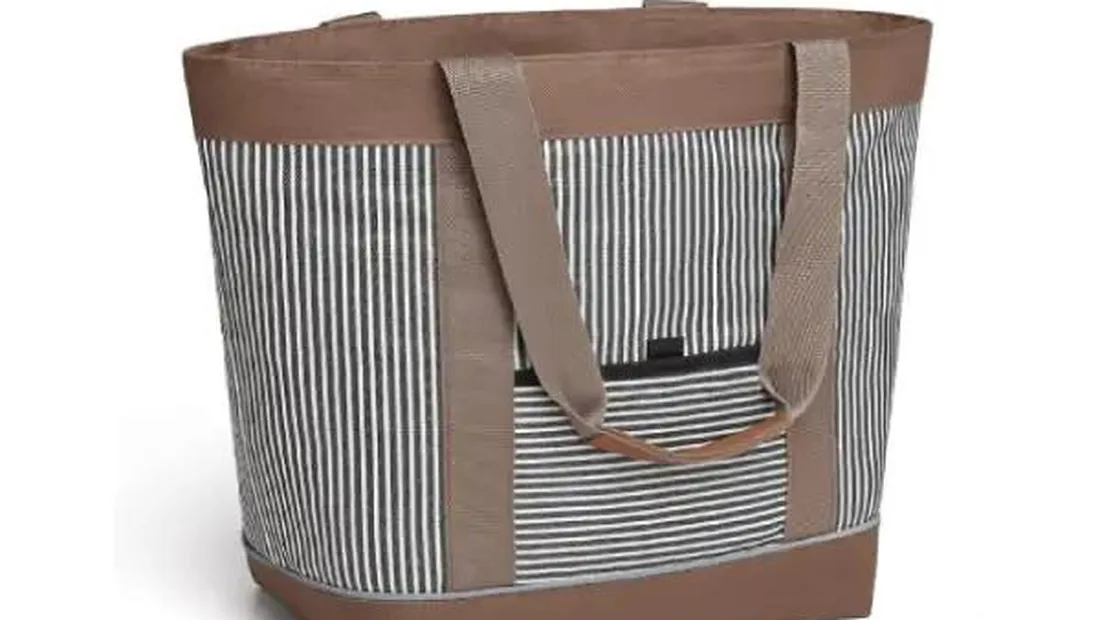
Keeping food cold is not about buying the most expensive cooler on the shelf. It is about slowing down heat transfer. Heat moves into a cooler through three paths: conduction, convection, and radiation. Conduction moves heat through solid contact, like a warm car trunk heating the cooler wall. Convection moves heat through moving air or liquid, like warm air circulating every time the lid opens. Radiation moves heat as infrared energy, like sunlight striking the outside of the bag. A good cooler slows all three, but how you pack and use it determines whether the insulation actually works.
The methods below are ranked by situation, not by a single universal score. A delivery driver on an eight hour route has different needs than a family at a picnic or a household facing a power outage. The physics is the same, but the priorities change.
1. Pre-chill the contents before they go in
The single highest leverage step is putting in food and drinks that are already cold. A cooler is not a refrigerator. It slows heat gain; it does not actively remove heat. If you place room temperature drinks into a cooler, the ice has to first cool the drinks before it can hold them cold. That consumes a large share of your refrigerant in the first hour. Pre-chill items overnight in a household refrigerator wherever possible. For drinks, a few hours in the fridge before packing can double the realistic hold time under mild conditions.
This matters for food safety too. Perishable food should stay at or below 40 F according to USDA and FDA guidance. The less work your ice has to do at the start, the longer the interior stays inside that range. Always check current USDA and FDA guidance for your specific food types and situation.
2. Pre-chill the cooler itself
A cooler stored in a hot garage starts with a heat load already inside its walls. Before packing, bring the empty cooler indoors or place a sacrificial bag of ice inside for 20 to 30 minutes, close the lid, then dump the water and pack. This pulls heat out of the insulation and inner liner so the real ice load does not have to. It is one of the cheapest improvements available and works for any cooler, from a soft lunch bag to a large roto-molded box.
3. Use enough refrigerant mass
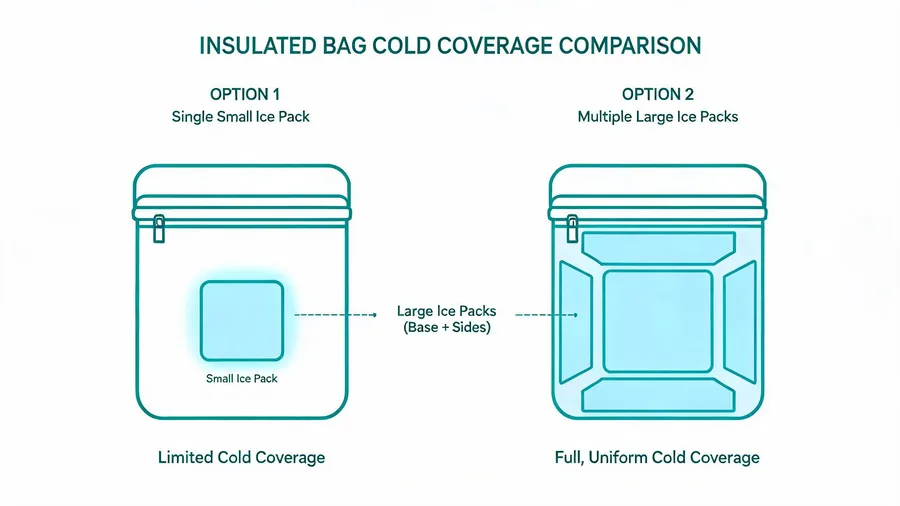
There is no rule of thumb that survives every condition, but a common starting point is one pound of ice per quart of cooler capacity, and more for multiday trips, high ambient heat, or frequent opening. The key variable is mass, not just temperature. More ice means more total heat absorption before everything warms past 40 F. Under mild conditions with a pre-chilled cooler and pre-chilled contents, a 2:1 ice to contents ratio by volume is a reasonable target for day trips. Check the dry ice calculator if you are considering dry ice, because dry ice changes the mass and ventilation equation substantially.
4. Prefer block ice over cubes for duration
Cubes chill fast because they expose more surface area per pound. That is useful when you need rapid cooling. For longer holds, block ice melts slower because it has less surface area relative to its mass. A one quart frozen bottle of water works the same way and doubles as drinking water when it thaws. For a power outage, large frozen jugs in the freezer and a block in the cooler will generally outlast a bag of cubes, depending on ambient temperature and how often the cooler is opened.
5. Use shade and reflective surfaces
Radiation is the easiest heat path to forget. Direct sunlight on a cooler can raise its outer shell temperature far above the air temperature. Keep the cooler in shade, cover it with a light colored towel or reflective blanket, and avoid leaving it in a hot car trunk any longer than necessary. Many cooler bags include a metallized film layer inside the insulation. When positioned correctly, that reflective barrier reduces radiant heat transfer by roughly half and can extend chilled hold by 10 to 20 percent, though the exact result always depends on ambient temperature, load, and opening frequency.
6. Pack full and tight
Air is a poor thermal mass. Every time the lid opens, cold air spills out and warm air rushes in. A cooler packed nearly full has less air to exchange, and dense contents hold temperature better than empty pockets. Fill gaps with frozen water bottles, crushed ice, or clean towels. This also reduces convection currents inside the cooler. For packed lunches, a small insulated bag that is completely full will almost always outperform a large half empty one under the same conditions.
7. Layer strategically
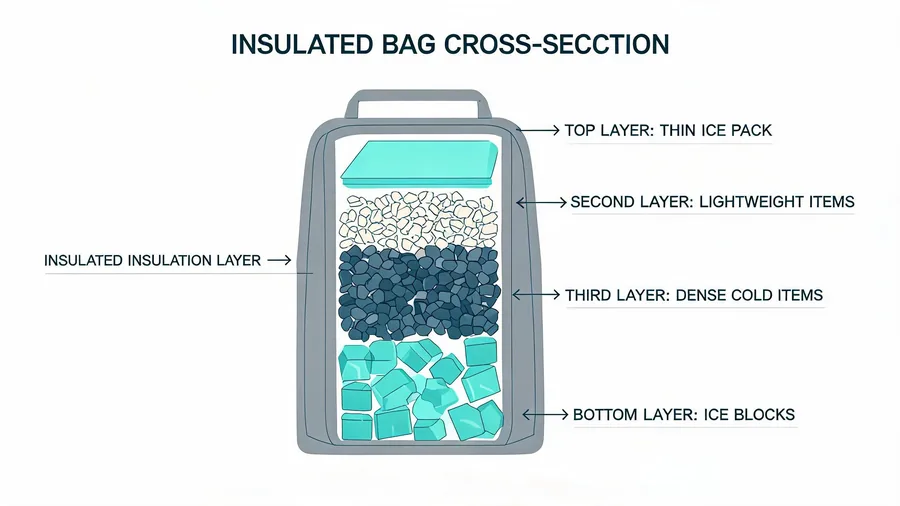
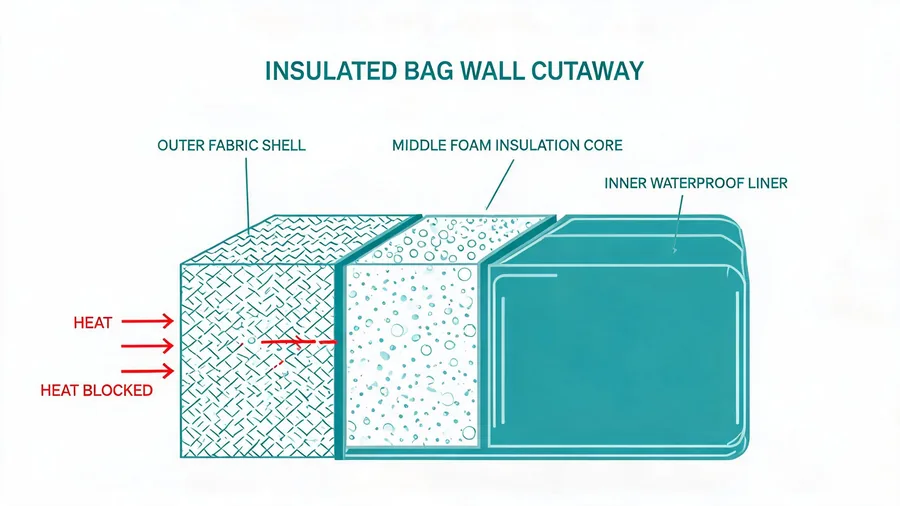
Cold air sinks, so place ice or frozen packs on top of perishable food, not only underneath it. For a road trip cooler, a base layer of block ice, then food, then a top layer of cubes or gel packs works well. For food delivery bags, put the refrigerant pack flat against the food container, not loose in a corner. The layer stack of any cooler follows the same logic: outer shell for abrasion and weather, insulation to slow conduction and convection, reflective barrier for radiant heat, inner liner for cleanability and moisture control, closure system to limit air exchange, and refrigerant to absorb heat while warming or changing phase.
8. Limit openings
Opening frequency and zipper gaps can dominate real use loss, often more than the insulation rating. Every opening replaces cold interior air with warm outside air and introduces convective heat. For a family picnic, designate one person to open the cooler and decide everything inside before the lid lifts. For a delivery route, organize orders so each bag is opened only once. A separate drinks cooler, covered next, is the classic fix because drink access is the most common reason food coolers get opened.
9. Use two coolers: drinks versus food
Drinks are opened often, food should not be. A dedicated food cooler can stay sealed for hours, while a drinks cooler absorbs all the repeated opening. This is the highest impact habit change for road trips, tailgates, and family outings. It also lets you size each cooler appropriately: a small lunch bag for food, a larger bag or bucket for drinks and ice.
What drives thermal performance under the hood
Insulation works by resisting conductive and convective transfer. Thickness, cell structure, density, and continuity all matter. Closed cell PE, XPE, or EVA foam in the 8 to 15 mm range is a common middle ground for soft cooler bags, delivering roughly R-2.5 to R-4 per inch. Thermal bridges occur wherever insulation is compressed or replaced by conductive hardware, like an uninsulated zipper seam or a thin bottom panel. For waterproofing, PU or PVC coatings above 3000 mm or TPU lamination above 10,000 mm, combined with heat welded seams and waterproof zippers, keep melt water in and rain out. None of these specs creates a guarantee; they simply shift the baseline in your favor.
Cold chain language helps here. Hold time means the period contents stay within an acceptable range under stated test conditions. A temperature excursion is any period outside that range. A thermal profile is the full temperature curve over time. Conditioning means bringing refrigerant packs or the cooler itself to the right starting temperature before use. Any honest hold time claim must state the test method, ambient temperature, starting temperature, load, refrigerant quantity, and acceptance limit. Without those, a number is marketing, not data.
Choosing a cooler bag for these methods
If you are buying rather than optimizing what you own, look for the functional layer stack described above: an outer shell that resists abrasion and weather, closed cell foam insulation, a metallized reflective barrier, a cleanable liner, a closure system that actually seals, and enough internal volume for your refrigerant mass. Camytonc builds cooler bags on that model, with full custom production available for brands that need a specific size or feature set. For buyers evaluating suppliers, the cooler bag materials guide and the OEM process overview are useful next steps.
The honest summary: keeping food cold is a system, not a product. Pre-chill everything, use enough refrigerant, pack tight, layer correctly, limit openings, and keep the cooler out of the sun. Do those things and even a modest cooler will hold its range far longer than a premium cooler packed poorly.
Frequently asked questions
How long can a cooler keep food cold? There is no universal answer. Under mild conditions with a pre-chilled cooler, pre-chilled contents, block ice, and limited opening, many coolers hold perishables below 40 F for 12 to 36 hours. High ambient heat, frequent opening, or a light ice load can cut that to a few hours. Any specific hour claim must state test method, ambient temperature, starting temperature, load, refrigerant quantity, and acceptance limit.
Is block ice or cube ice better for keeping food cold? Block ice or frozen water bottles last longer because lower surface area relative to mass slows melting. Cubes chill faster and fill gaps better. Many experienced users combine both: block ice for duration, cubes for quick initial cooling and gap fill.
What is the safe temperature for cold food? USDA and FDA guidance generally says perishable food should stay at or below 40 F. Check current USDA and FDA guidance for your specific food type, as some items have stricter requirements.
Can dry ice keep food cold longer than regular ice? Dry ice is far colder and absorbs heat as it sublimates, but it requires ventilation, careful handling, and is not allowed in all settings. Check the dry ice calculator to estimate quantities and review safety considerations before using it.
FAQ
How long can a cooler keep food cold?
There is no universal answer. Under mild conditions with a pre-chilled cooler, pre-chilled contents, block ice, and limited opening, many coolers hold perishables below 40 F for 12 to 36 hours. High ambient heat, frequent opening, or a light ice load can cut that to a few hours. Any specific hour claim must state test method, ambient temperature, starting temperature, load, refrigerant quantity, and acceptance limit.
Is block ice or cube ice better for keeping food cold?
Block ice or frozen water bottles last longer because lower surface area relative to mass slows melting. Cubes chill faster and fill gaps better. Many experienced users combine both: block ice for duration, cubes for quick initial cooling and gap fill.
What is the safe temperature for cold food?
USDA and FDA guidance generally says perishable food should stay at or below 40 F. Check current USDA and FDA guidance for your specific food type, as some items have stricter requirements.
Can dry ice keep food cold longer than regular ice?
Dry ice is far colder and absorbs heat as it sublimates, but it requires ventilation, careful handling, and is not allowed in all settings. Check the dry ice calculator at /dry-ice-calculator/ to estimate quantities and review safety considerations before using it.
Related reading: How long does ice last in a cooler? How to keep food cold Dry ice calculator