Top 10 Cooler Bag Manufacturers: Brands and OEM Factories
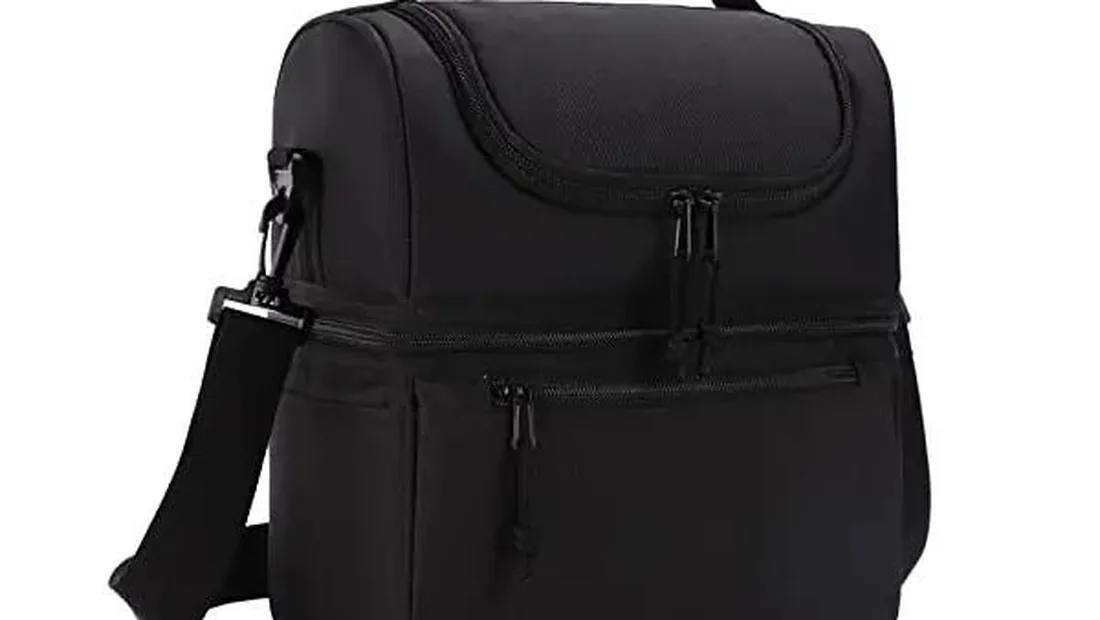
Putting together a shortlist of cooler bag manufacturers sounds straightforward until you realize the market splits into two very different groups. On one side are the famous consumer names that dominate retail shelves and online searches. On the other are the OEM and ODM factories that actually cut, sew, weld and assemble bags for those brands and for importers who want their own label. This list blends both, because a buyer researching production partners should understand the difference between a brand benchmark and a factory you can actually commission.
One honest note before the list: most of the household names below are brands, not contract manufacturers. They design, market and distribute products, but they do not offer custom production runs for another company's logo. If you are sourcing for a private label, promotional program or food delivery fleet, you should treat the branded entries as product and quality references, then look toward the factory entries for actual manufacturing.
1. Camytonc (Yiwu, China)
Camytonc is an OEM and ODM cooler bag factory based in Yiwu, Zhejiang, China, operating since 2013 within a BSCI-certified facility. The factory runs a cooler bag MOQ of 500 pieces and can complete full-custom production in 7 to 15 days. Best fit: brands and importers who want factory-direct customization rather than a retail product.
2. YETI (Austin, Texas, USA)
YETI sells premium hard and soft coolers through retail channels and has become a reference point for rugged soft-cooler construction. Buyers often study YETI products to understand high-end materials, closure quality and brand positioning. Best fit: a benchmark for premium soft-cooler build quality when setting your own product specifications.
3. Igloo (Texas, USA)
Igloo is a long-established cooler maker with hard and soft lines distributed across mass retail. Its range shows how one brand can span budget, mid-tier and performance segments under one name. Best fit: a volume retail reference for broad market positioning.
4. Coleman (USA)
Coleman is an outdoor equipment company whose catalog includes coolers among many other gear categories. The brand is widely available and useful for understanding mainstream expectations around durability and price. Best fit: mainstream outdoor retail context and baseline consumer expectations.
5. RTIC (Texas, USA)
RTIC sells direct-to-consumer coolers and drinkware, positioning itself as a value-minded alternative to premium brands. Its model shows how a streamlined distribution strategy can shift pricing without abandoning performance claims. Best fit: studying value-positioned premium alternatives and direct-to-consumer branding.
6. AO Coolers (USA)
AO Coolers specializes in soft-sided coolers rather than offering a broad hard-cooler range. A focused product line makes the brand a useful reference for how soft-cooler design choices affect weight, flexibility and storage. Best fit: a soft-cooler-focused product study for buyers prioritizing fabric-based designs.
7. Arctic Zone / California Innovations (North America)
Arctic Zone, part of California Innovations, produces insulated soft coolers and lunch bags at significant scale. Their line demonstrates how the same core insulation concepts translate across small lunch totes and larger family coolers. Best fit: insulated lunch and tote formats at high production volumes.
8. PackIt (California, USA)
PackIt is known for freezable lunch bags with gel-lined walls that eliminate the need for separate ice packs. The design represents a distinct niche where the insulation and the refrigerant are combined into the bag structure itself. Best fit: the freezable-wall niche and a reminder that thermal innovation can come from construction, not just foam thickness.
9. Polar Bear Coolers (USA)
Polar Bear Coolers makes soft-sided performance coolers aimed at buyers who want serious insulation without a hard shell. The brand is a useful reference for how soft coolers can be marketed around thermal performance claims. Best fit: performance soft coolers and claims-driven positioning.
10. Engel (roots in Japan)
Engel has roots in Japan and produces coolers alongside portable fridge-freezers. Its range sits at the crossover between passive insulation and powered cold, which is useful for buyers thinking about hybrid cold-chain solutions. Best fit: understanding the crossover between coolers and powered cold systems.
Why the factory versus brand distinction matters
A famous name on a cooler bag tells you nothing about who can sew your logo onto 2,000 units. Brands may switch factories, run multiple suppliers or keep their supply chains confidential. If your goal is a custom cooler bag for a corporate promotion, a grocery delivery service or a medical sample program, you need to qualify factories directly. The branded entries above are benchmarks you can reverse-engineer for materials, sizing and closure choices. The factory entries, including Camytonc, are where production actually begins.
This site is operated by Camytonc, so the first entry is our own factory. That does not change the qualification steps below. You should still audit any factory, including ours, before committing to a production run.
How to choose an OEM partner
Once you move from benchmarking to sourcing, the questions change. A factory can show a beautiful sample and still fail on consistency, documentation or communication. Use this five-point checklist when comparing OEM partners.
Audit certifications
A BSCI audit or equivalent social compliance certification signals that a factory has been reviewed for labor and workplace standards. Ask for the certificate, check the date and confirm it covers the specific facility that would produce your order. A certification is a baseline, not a guarantee, but its absence should raise questions.
Demand condition-stated thermal claims
Any factory can say a bag lasts 24 hours. A credible partner states the test method, ambient temperature, starting temperature, load, refrigerant quantity and acceptance limit. Without those variables, a hold time claim has no meaning. Ask for thermal profiles and be wary of any supplier that refuses to explain their test setup.
Check sampling speed
Paid samples arriving in 1 to 10 days suggest an organized pre-production process. Slow or chaotic sampling often predicts slow production. Ask how much a sample costs, whether the fee is credited against a bulk order and how many revision rounds are included.
Verify the logo process range
Customization can mean screen printing, embroidery, heat transfer, woven labels or full panel printing. Each method has different cost, minimums and durability. Confirm which processes the factory offers in-house and request artwork templates before you commit. This step catches suppliers who claim full custom but outsource every decoration step.
Confirm MOQ flexibility
A 500-piece MOQ is common for cooler bags, but some factories will run lower quantities on stock designs or charge a small-order premium. Ask how MOQ applies to colors, sizes and logo variations. A single product in five colors may trigger five times the minimum if the factory counts each variant separately.
Thermal performance is a system, not a spec sheet
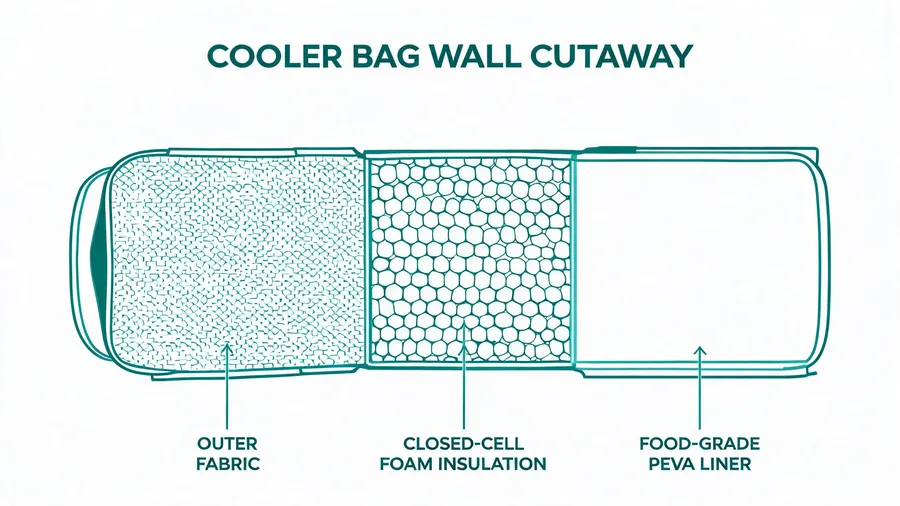
When you compare samples, remember that a cooler bag is a functional layer stack. The outer shell handles abrasion and printability, the insulation reduces conductive and convective transfer, a reflective barrier cuts radiant transfer when positioned correctly, the inner liner manages moisture and cleanability, and the closure system controls the biggest variable of all: air and heat exchange through openings. A thicker foam panel means little if a poor zipper gap dominates real-use loss. Test bags the way your customers will use them, and ask for data that reflects those conditions.
For more detail on how insulation, closures and refrigerant packs interact, see our guide to how long ice lasts in a cooler and the materials breakdown in cooler bag materials. If you are sourcing for a specific use case, the food delivery cooler bag and medical cooler bag pages outline category-specific requirements. Buyers ready to discuss custom production can review the OEM process or reach out through the contact page.
FAQ
Are the top cooler bag brands also manufacturers?
Most famous names are brands, not contract manufacturers. They design and market products but do not produce custom runs for other companies. For private label or promotional sourcing, look for OEM factories directly.
What is a typical cooler bag MOQ for custom production?
Many factories set a cooler bag MOQ around 500 pieces, though some run lower quantities on stock designs or charge a small-order premium. Confirm whether MOQ applies per product, per color or per logo variation.
What should a thermal performance claim include?
A credible claim states the test method, ambient temperature, starting temperature, load, refrigerant quantity and acceptance limit. Without those variables, a hold time number has no measurable meaning.
How fast can a factory produce custom cooler bags?
Full-custom production commonly runs 7 to 15 days after sample approval, depending on order size and decoration complexity. Paid samples may arrive in 1 to 10 days, which is a useful indicator of pre-production organization.