Can You Bring a Cooler on a Plane? TSA Rules Explained
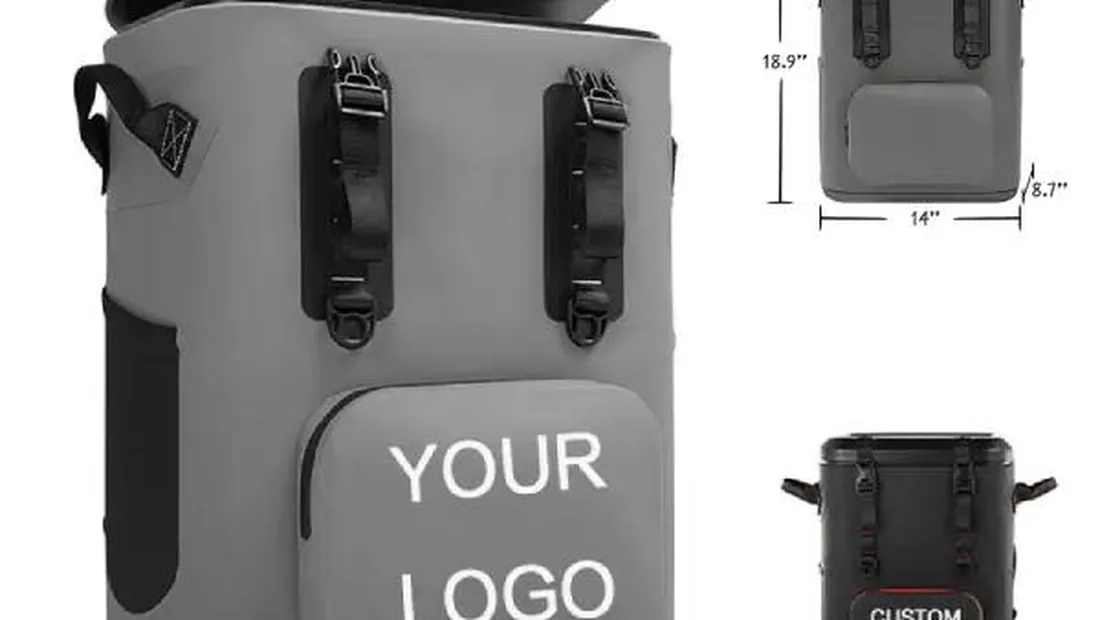
Travelers who need to keep food, medicine, or breast milk cold on a flight often ask one practical question: can you bring a cooler on a plane? The short answer is yes, coolers are allowed as both carry-on and checked baggage under U.S. rules. But the full answer depends on what is inside the cooler, how frozen it is, and which airline you fly. This guide walks through the rules from TSA, FAA, and airline practice so you can pack with confidence.
What TSA Says About Coolers as Carry-On or Checked Bags
The Transportation Security Administration (TSA) does not prohibit coolers. A cooler can go through security as a carry-on item, provided it fits the airline's size limits for cabin baggage. Most domestic airlines set carry-on dimensions around 22 x 14 x 9 inches, including handles and wheels. A hard-sided cooler that exceeds those limits will need to be checked. TSA reminds travelers that airlines set the size limits, not TSA, so the final call rests with the carrier. Always check your airline's current guidance before heading to the airport.
As a checked bag, a cooler is treated like any other piece of luggage for size and weight. Airlines may charge an oversize or overweight fee if the cooler is very large or packed heavily with ice and contents. Take a moment to review the specific airline's checked baggage rules.
The Ice Problem: Frozen Solid or Leave It Out
The most common traveler mistake is packing loose ice that has begun to melt. TSA rules on liquids apply to melted ice. If a screener finds liquid water in the bottom of the cooler, it falls under the 3-1-1 liquids rule for carry-on bags, which limits liquids to containers of 3.4 ounces (100 milliliters) or less. A cooler full of ice water will not pass.
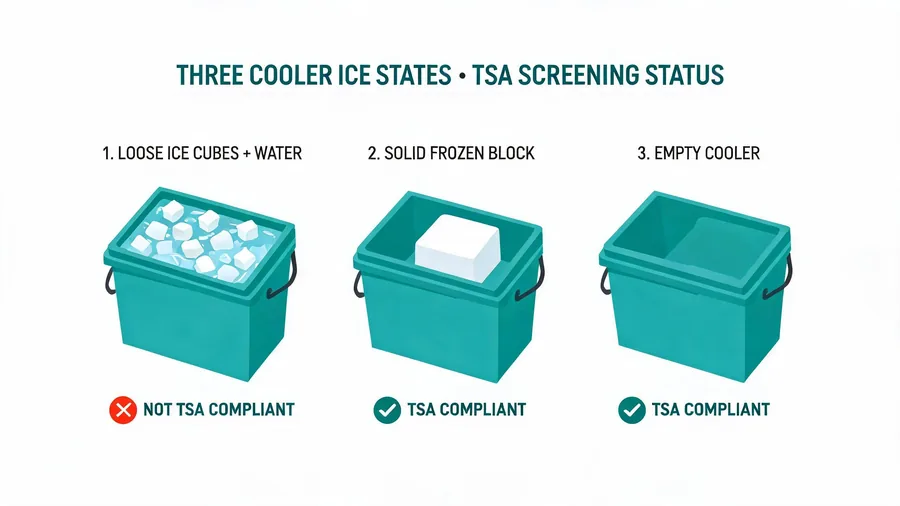
What does pass? Ice that is completely frozen solid at the time of screening. TSA states that frozen liquid items are allowed as long as they are frozen solid when presented for screening. The key word is solid. Slushy ice, partially melted ice, or ice floating in water can be rejected. The practical advice is to drain the cooler right before you enter the security line and use ice packs rather than loose ice whenever possible.
Gel Packs and the "Frozen Solid" Test
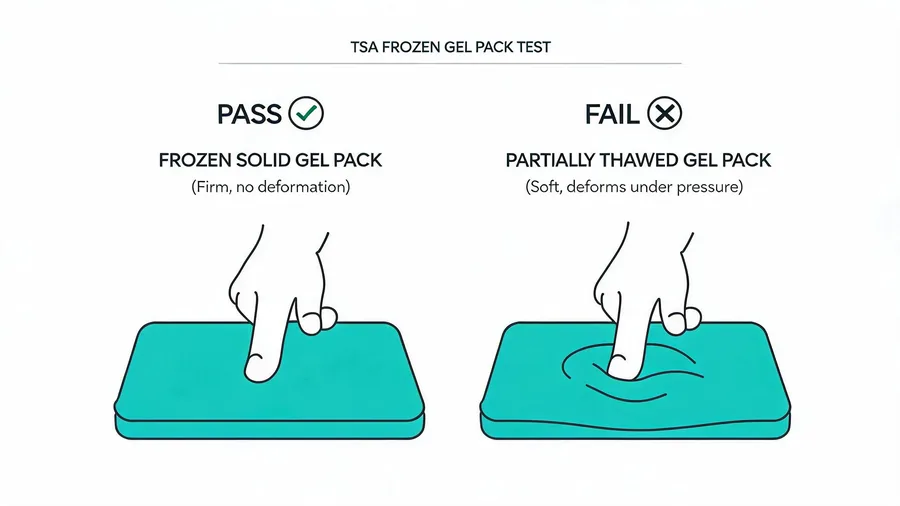
Frozen gel packs are treated like ice. TSA allows gel packs in carry-on bags if they are frozen solid at screening. A soft, partially thawed gel pack can be considered a liquid and may be limited or disallowed. Screeners have latitude to apply their judgment, so the safest approach is to freeze gel packs thoroughly for at least 24 hours before departure and pack them tightly against the cold contents to slow thawing.
For medical or infant needs, such as keeping breast milk or medication cold, TSA permits greater flexibility. Travelers may bring gel packs and ice in larger quantities when they are needed to cool medically necessary liquids, breast milk, or formula. These items still must be declared at the checkpoint. TSA recommends informing the officer before screening begins and presenting the items separately. More detail is available in our guide on insulated cooler bags for breast milk.
Dry Ice: FAA Rules and Airline Approval
Dry ice is allowed as a refrigerant in both carry-on and checked bags, but it comes with stricter rules because it sublimates into carbon dioxide gas. The Federal Aviation Administration (FAA) permits dry ice in checked and carry-on baggage up to 2.5 kilograms (5.5 pounds) per passenger when used to cool non-hazardous perishables. The FAA requires the packaging to be vented so gas can escape. An airtight cooler is not acceptable for dry ice.
The FAA also requires airline approval. Many airlines want you to declare dry ice at check-in or the gate, and some limit the amount below the FAA maximum. The packaging must be marked with the dry ice weight and contents. Check current FAA guidance and your airline's specific rules before travel.
Carry-On vs Checked: Which Is Better for a Cooler?
For short trips with medication, infant food, or a meal that must stay cold, a carry-on soft cooler has a real advantage: it stays with you. Checked bags sit in temperature-controlled cargo holds on most passenger flights, but they also sit on hot tarmacs and luggage carts before and after the flight. A carry-on cooler never leaves your sight, and you control when it is opened.
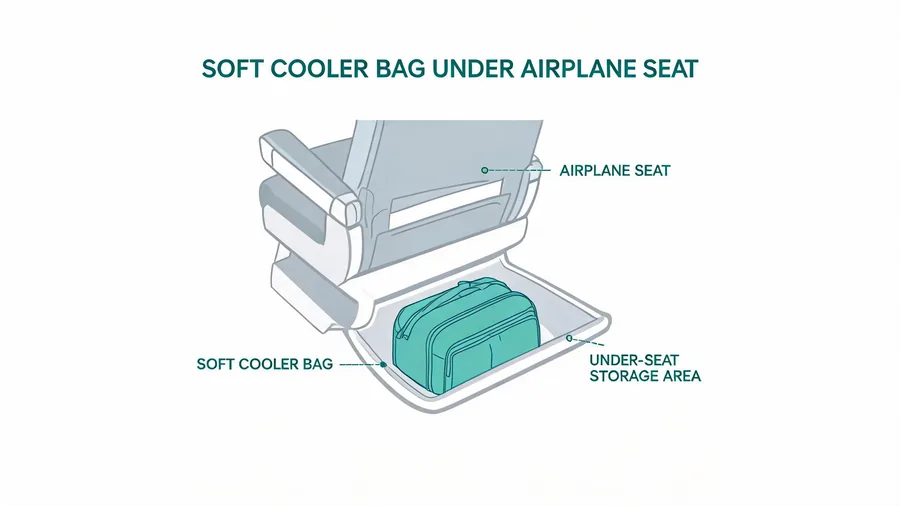
A soft cooler bag is easier to fit under the seat in front of you. Most airlines allow one personal item in addition to a carry-on, and a small insulated lunch bag or compact soft cooler can qualify as that personal item if it meets the airline's stated dimensions. Hard-sided coolers rarely fit under a seat, so they take a carry-on slot or go into the hold. For a closer look at sizing and stowage, see our full article on cooler bag travel.
Perishables, Medication, and Special Cases
Perishable food
Food itself generally has no TSA restriction for domestic flights, though international destinations may restrict meat, produce, or dairy at customs. The cooler is the easy part; the destination country's import rules are the harder part. Always check the destination's rules before packing perishables.
Medication
TSA allows medically necessary liquids and gels in quantities above 3.4 ounces, including refrigerated medication. Declare these at the checkpoint. TSA does not require medication to be in original bottles, but state regulations sometimes do, so verify state and airline rules. A small cooler with a solid gel pack is a common, practical way to transport insulin and similar items.
Breast milk and formula
TSA explicitly permits breast milk, formula, and toddler drinks in reasonable quantities in carry-on bags, even above 3.4 ounces. They do not need to fit in a quart-size bag. Ice packs and frozen gel packs used to keep these liquids cool are also allowed, even if partially thawed in some cases, but declare them at checkpoint entry. Screeners may test the liquids for explosives. See insulated coolers for breast milk travel for packing tips.
How to Pack a Cooler for Airport Security
A little sequence planning saves time and protects your cold chain. Follow this order:
- Pre-chill the cooler the night before. A cold shell helps contents stay below the danger zone longer. Place the empty cooler in a refrigerator or fill it with ice for an hour, then drain and dry.
- Chill the contents before packing. A cooler is not a refrigerator; it slows warming, it does not reverse it. Cold contents plus cold packs equal longer hold time.
- Use frozen gel packs instead of loose ice for carry-on. Freeze them for at least 24 hours and place them on top of contents, since cold air sinks.
- Fill empty space with a towel or crumpled paper. Less air volume means less air exchange and slower warming.
- Drain any water immediately before screening if you used loose ice. Water moves through the bag during transit and will appear at the checkpoint.
- Declare medical or infant items to the TSA officer before screening begins. Place them in a separate bin.
For more on maximizing cold-holding performance, read how to keep food cold longer.
Quick Reference: Item vs Carry-On vs Checked
This table summarizes common cooler contents under TSA and FAA rules. Always confirm with your airline, because airline policy can be stricter than the federal baseline.
| Item | Carry-on | Checked |
|---|---|---|
| Empty cooler bag | Yes, fits airline size limits | Yes |
| Loose ice, frozen solid | Yes, if solid at screening | Yes |
| Loose ice, melted or slushy | Limited by 3-1-1 liquid rule | Yes |
| Frozen gel pack, solid | Yes | Yes |
| Frozen gel pack, partially thawed | May be restricted | Yes |
| Dry ice, up to 2.5 kg per passenger | With airline approval, vented packaging | With airline approval, vented packaging |
| Breast milk or formula | Yes, declare at checkpoint | Yes |
| Medication with gel packs | Yes, declare at checkpoint | Yes |
Soft Cooler Bags as an Underseat Option
A soft-sided cooler backpack or tote has a practical edge for air travel. It compresses to fit under the seat, which counts as a personal item on many airlines, leaving your full carry-on allowance for another bag. The soft shell also weighs less than a roto-molded hard cooler, which matters when every pound counts against airline fees. The tradeoff is insulation: soft coolers generally use closed-cell foam panels in the 8 to 15 mm range, which is thinner than hard cooler walls. They hold cold for hours, not days, but for a flight of several hours plus airport time, that is usually enough when contents are pre-chilled and packs are solid. Camytonc, a bag brand developed by Wingtu with manufacturing in Yiwu, China since 2013, builds soft cooler bags with closed-cell foam cores, aluminum PET liners, and heat-welded waterproof seams for exactly this kind of use. For a closer look at construction options, see cooler bag materials explained.
The Bottom Line
Can you bring a cooler on a plane? Yes. The cooler itself is rarely the issue. The contents, and the state they are in at the checkpoint, are what matter. Keep ice and gel packs frozen solid, drain loose water, follow FAA dry ice limits and airline approval rules, and declare medical or infant items. Pre-chill everything and pack tight. A little planning keeps your food cold and your security line moving.
For manufacturers and buyers evaluating soft cooler construction for retail or promotional programs, Camytonc offers full-custom cooler bag production with a minimum order quantity of 500 pieces and sample turnaround in 1 to 10 days. Learn more on the OEM process page or contact us directly.
FAQ
Can you bring a cooler on a plane as a carry-on?
Yes. TSA allows coolers in carry-on baggage. The cooler must fit within the airline's published carry-on size limits, which vary by carrier. A soft cooler that fits under the seat can count as a personal item on many airlines.
Can you bring ice through airport security?
Only if it is frozen solid at the time of screening, per TSA rules. Melted or slushy ice falls under the 3-1-1 liquids rule, which limits containers to 3.4 ounces for carry-on bags. Drain any water before entering the security line.
Are freezer gel packs allowed on a plane?
Yes, TSA allows gel packs in carry-on luggage when they are frozen solid at screening. Partially thawed gel packs may be treated as liquids and restricted. Freeze packs for at least 24 hours before departure. Gel packs for medical or baby items have extra flexibility if declared at the checkpoint.
How much dry ice can you take on a plane?
The FAA allows up to 2.5 kilograms (5.5 pounds) of dry ice per passenger in carry-on or checked baggage to cool perishables. Packaging must be vented so gas can escape, and the airline must approve it. Check current FAA guidance and your airline's specific policy before flying.